What is Lupus?
Systemic Lupus Erythematosus (SLE) or simply Lupus, is a disease where the body’s immune system produces antibodies which attack healthy tissue (an autoimmune disease), causing inflammation. It can affect many parts of the body from the skin, to joints, nervous system, blood, kidneys, lungs, heart, muscles and bones.
Lupus can affect the skin, joints, nervous system, blood, kidneys, lungs, heart, muscles and bones. #performbetter @pogophysio Share on XSigns and symptoms vary greatly between people who have Lupus as the disease affects them differently. This makes diagnosis difficult, and therefore selecting the correct treatment protocol difficult.
It is not known what causes Lupus, but it is believed that hormones, genetics and the environment (e.g. stress, infection, and UV exposure) may be linked. It affects roughly 20 in 100,000 people around the world, with age between 15 – 45 years most commonly affected. Women are 9 times more likely to have the disease than men in their childbearing years.
How Lupus Presents
While SLE can affect many organs in the body, it rarely affects them all. The initial symptoms may be relatively mild, but as the disease progresses, more of the body’s systems become involved and therefore the severity of symptoms can increase over time.
The most common signs and symptoms in children and adolescents are:
- Fever
- Fatigue
- Weight loss
- Arthritis
- “Butterfly” rash on the face after sun exposure
- Renal (kidney) disease
About 70% people with Lupus have the following skin symptoms:
- Thick, red scaly patches of skin
- Hair loss
- Mouth, nasal, urinary tract and vaginal ulcers
About 90% will experience joint and or muscle pain, but not to the same disabling state as rheumatoid arthritis.
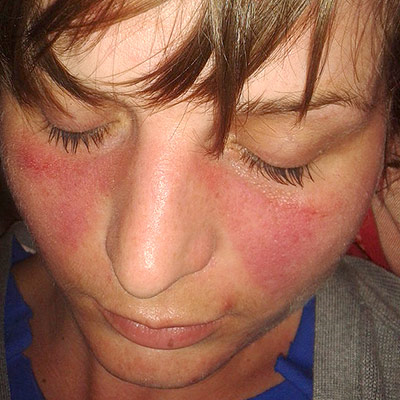
Butterfly Rash (source: WikiMedia Commons)
How Lupus is Diagnosed
Lupus is diagnosed by your physician or doctor. A diagnosis is positive for Lupus if a patient as any 4 of the following signs and symptoms.
- Butterfly rash after sun exposure
- Chronic discoid rashes that can scar
- Skin rashes that appear after sun exposure
- Ulcers in the mouth and nose
- Serositis (e.g. Pleuritis and Pericarditis)
- Arthritis
- Abnormal urine protein
- Neurological disorders (seizures and psychosis)
- Blood disorders (e.g. anemia)
- Blood tests for certain antibodies associated with Lupus
Physiotherapy for Lupus
Unfortunately, there is no cure for Lupus. However, patients often experience periods where symptoms flare up and then go into remission (decrease). Remission is the time patients should be as active as possible. The goal of physiotherapy is to help patients reduce the severity of their symptoms through activity.
Patients with Lupus often experience periods where symptoms flare up and then go into remission (decrease). #performbetter @pogophysio Share on XPhysiotherapy focuses on:
- Lifestyle changes such as reducing sun exposure, getting better sleep and joint protection
- Aerobic exercises such as hydrotherapy, swimming, walking and cycling for 30 minutes per day, which can help reduce fatigue and make most patients “feel much better”
- Muscle Strength and range of motion exercises which can help improve posture, protect joints, increase energy levels and cardiovascular fitness and functional capabilities
Medications for Lupus
Medications that can help reduce symptoms include:
- Anti-inflammatory drugs such as ibuprofen, which can help reduce joint pain
- Steroid creams for skin rashes
- Steroid injections to help control flare up of symptoms
Please consult your doctor for advice on these medical treatments.
Wayne Wu
Student Physiotherapist
References
Christian, A., Lonnemann, E., Lowe, R., Ritchie, L., & Walker, W. (n.d.). Systemic Lupus Erythematosus Retrieved December 05, 2016, from http://www.physio-pedia.com/Systemic_Lupus_Erythematosus
Hochberg, M. C. (1997). Updating the American college of rheumatology revised criteria for the classification of systemic lupus erythematosus. Arthritis & Rheumatism, 40(9), 1725-1725. doi: 10.1002/art.1780400928
Ramsey-Goldman, R., Schilling, E. M., Dunlop, D., Langman, C., Greenland, P., Thomas, R. J., & Chang, R. W. (2000). A pilot study on the effects of exercise in patients with systemic lupus erythematosus. Arthritis Care Res, 13(5), 262-269.
Wikipedia contributors. (2016, November 18, 2016). Systemic lupus erythematosus Retrieved December 05, 2016, from https://en.wikipedia.org/w/index.php?title=Systemic_lupus_erythematosus&oldid=750161185